


HeaRTNovation
Oil-Based Thermal Disinfection Technology for Treatment of Infectious Healthcare Wastes
Technology Generators
University of the Philippines Los Baños
University of the Philippine Visayas
Project Leader: Dr. Ramer P. Bautista
The Problem
According to the Department of Environment and Natural Resources (DENR), the country has generated 52,000 metric tons of medical wastes since the start of the pandemic last year. Unlike other general wastes or wastes that are generated from household and office works, medical wastes need to undergo thorough disinfection prior to disposal. Special medical waste treatment, storage, and disposal (TSD) facilities are handling the proper disposal of these infectious medical wastes.
However, there are only few TSD facilities in the Philippines for medical wastes, most of which are situated in Luzon. Current methods employed by these facilities involve the use of autoclave, hydroclave, and microwave. Although these technologies are already proven to be effective in rendering medical wastes safe for disposal, they still pose some disadvantages. These methods are energy-intensive and usually render less waste volume and mass reduction. There is also a high tendency for recurrence of infectious bacteria a few days after treatment.
The Solution
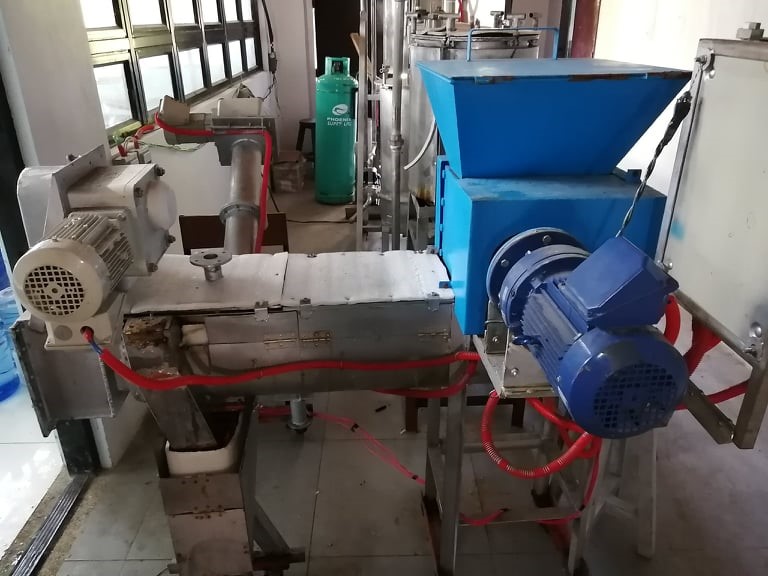
To address this problem, Dr. Ramer P. Bautista and his team of researchers from the University of the Philippines Los Baños, Department of Chemical Engineering (UPLB-DChE) and the University of the Philippines Visayas, School of Technology (UPV-SOTECH), through the funding assistance provided by the Philippine Council for Health Research and Development (PCHRD), developed an oil-based thermal disinfection technology to treat infectious wastes from healthcare facilities. The oil-based thermal disinfection technology is an on-site treatment technology that can operate at atmospheric pressure. It utilizes vegetable oils incorporated in the heating unit, which allows for heating at temperatures ranging from 170-200°C, thereby killing all the pathogens in the waste, without emitting any toxic gases. Overall treatment cost is lower than autoclaving, and can render up to 75% waste mass and volume reduction. The technology is also capable of preventing the bacterial contamination of roads and impedes the recurrence of infectious bacteria for up to 30 days post treatment. Moreover, this treatment system offers around 31% energy savings compared to the autoclave treatment.
Product Development Stage
Two (2) prototypes were generated from this project and both are currently at Technology Readiness Level (TRL) 6. The prototypes are being improved for installation and demonstration in partner hospitals.
Contact Person
Dr. Romel M. Carlos
Director, University of the Philippines Los Baños – Technology Transfer and Business Development Office (UPLB-TTBDO)
(049) 501 4756
ctte.uplb@up.edu.ph


how government works and the people behind it.